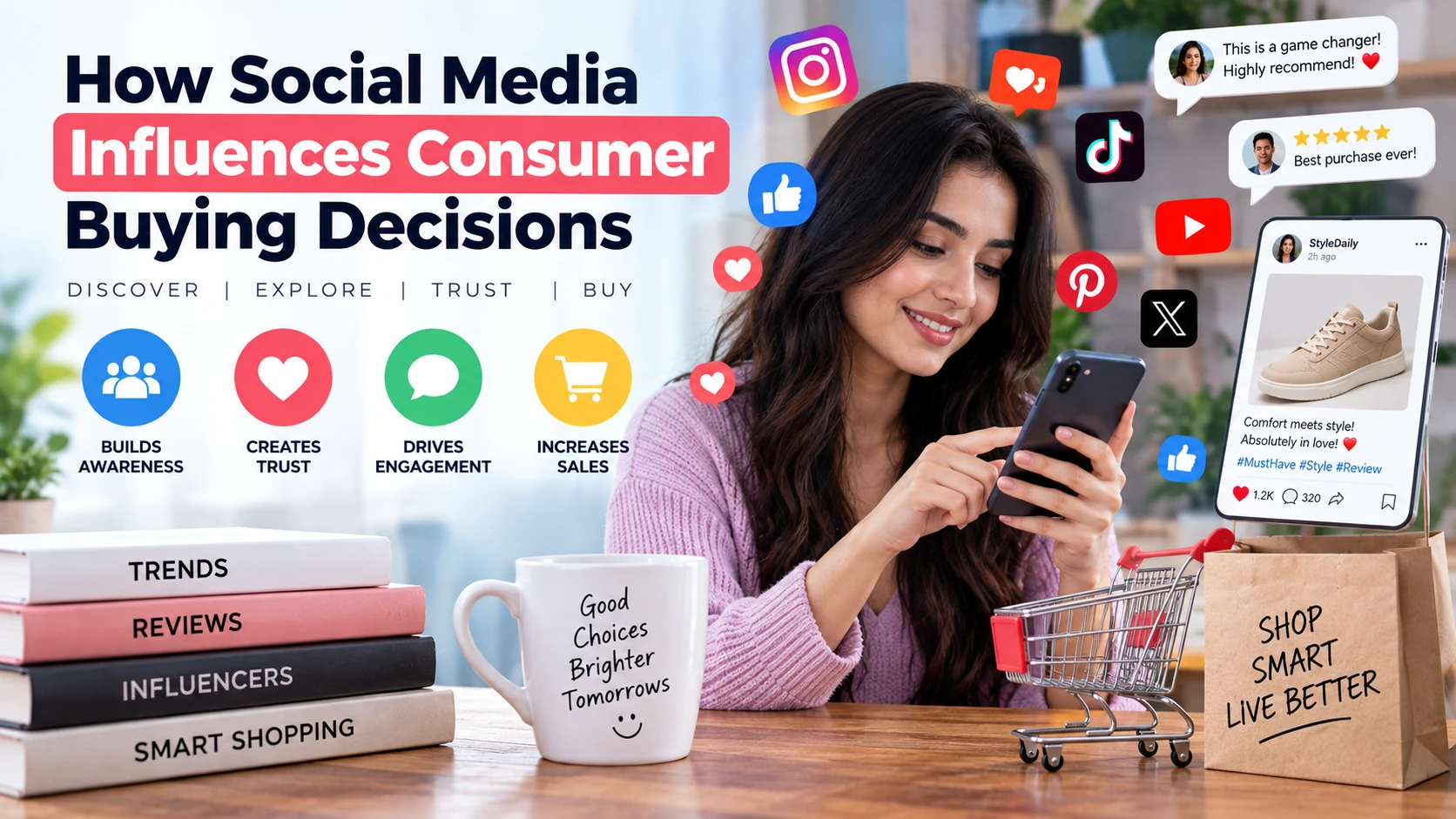
Social media has become an important part of modern consumer behavior. Platforms where people share photos, videos, reviews, opinions, and recommendations can influence what consumers notice, consider, and eventually purchase. Businesses use social media not only to promote products but also to build relationships with potential customers and understand changing preferences.
Product Discovery Begins on Social Media
Many consumers discover products while scrolling through social media rather than actively searching for them. A short video, photograph, review, or recommendation can introduce someone to a brand they had never previously considered.
Visual content can be particularly influential for industries such as fashion, beauty, food, travel, home décor, and technology. When a product appears naturally within content that consumers already enjoy, it may attract attention without feeling like traditional advertising.
Reviews Build Consumer Confidence
People often look for other customers’ opinions before making purchasing decisions. Social media comments, ratings, testimonials, and user-generated content can provide insight into how a product performs in real-world situations.
Positive experiences can increase confidence, while repeated complaints may cause potential customers to reconsider a purchase. Consumers may also compare several opinions before deciding whether a product is worth the price.
Influencers Can Shape Preferences
Influencers and content creators have become an important part of digital marketing. Their recommendations can introduce products to audiences who already trust their opinions or value their expertise.
The impact of an influencer often depends on relevance and credibility. A creator whose content closely matches a particular audience may have a stronger influence than someone with a much larger but less relevant following.
User-Generated Content Matters
Photos, videos, reviews, and posts created by customers can make products feel more authentic. Instead of seeing only professionally produced advertisements, potential buyers can see how ordinary customers use an item.
This type of content can help consumers understand product appearance, quality, size, functionality, or practical benefits. It can also create a sense of community around a brand.
Social Proof Encourages Purchases
People often look at what others are buying or recommending when evaluating a product. High engagement, positive comments, customer photos, and large numbers of followers can create social proof.
When consumers see many people interacting positively with a product, they may perceive it as more popular or trustworthy. However, consumers should still evaluate products independently rather than assuming popularity automatically means quality.
Personalized Advertising
Social media platforms can deliver advertisements based on various signals and user activity. As a result, consumers may encounter products related to interests they have previously demonstrated.
Personalized advertising can make promotions more relevant. For example, someone researching travel products may later encounter advertisements for luggage, hotels, or travel accessories. This can influence which products remain visible during the consideration process.
Discounts Create Purchase Motivation
Social media is also frequently used to promote limited-time discounts, special offers, product launches, and promotional codes. These offers can encourage consumers to make decisions more quickly.
However, urgency can sometimes lead to impulse purchases. Consumers should compare prices and consider whether they actually need a product before responding to a time-limited promotion.
Social Media Encourages Brand Interaction
Consumers can communicate directly with businesses through comments, messages, and other social features. Quick responses to questions or complaints can improve the overall customer experience.
Brands that actively engage with their audiences may create stronger relationships. Consumers can feel more connected to businesses when they receive useful information rather than simply seeing promotional content.
Trends Can Affect Buying Behavior
Social media trends can spread rapidly. A particular product, style, food item, destination, or service can suddenly become popular after appearing repeatedly in viral content.
This can influence consumers who want to participate in a trend or experience something they have seen online. Trends can create significant short-term demand, although their popularity may change just as quickly.
Consumers Are Becoming More Informed
Social media not only encourages purchases; it can also help consumers research products. People can compare features, prices, experiences, alternatives, and customer feedback before spending money.
This gives consumers more information than traditional advertising alone may provide. At the same time, misinformation, edited content, sponsored promotions, and fake reviews mean consumers need to evaluate online information carefully.
Conclusion
Social media has transformed the way consumers discover, research, evaluate, and purchase products. Reviews, influencers, user-generated content, personalized advertisements, discounts, trends, and direct brand interactions can all affect buying decisions. For businesses, social media provides an opportunity to connect with customers more interactively. For consumers, it offers useful information but also requires careful judgment. Understanding how social media influences purchasing behavior can help people make more informed decisions in an increasingly digital marketplace.