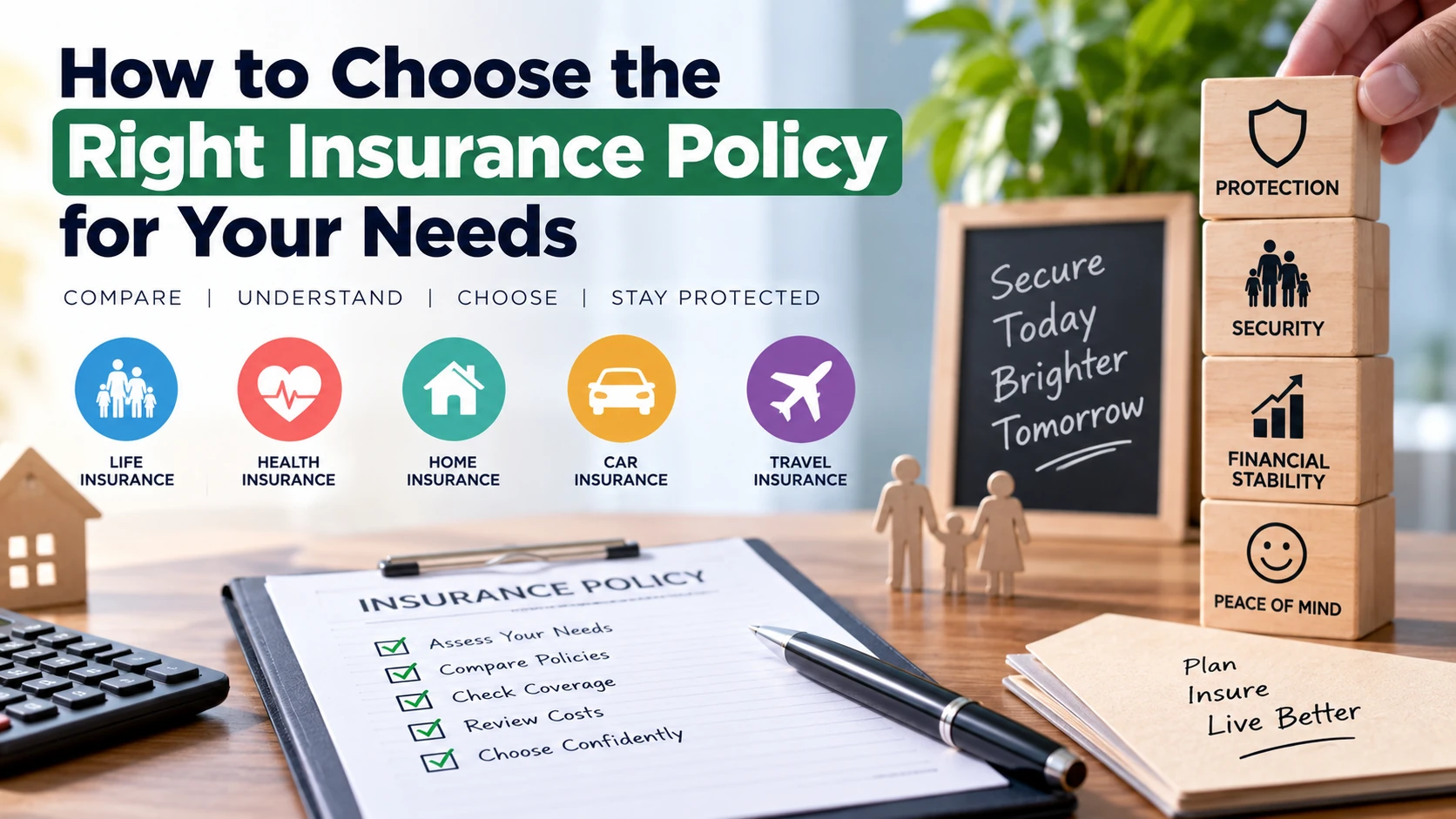
Insurance is an important part of financial planning because it can help protect individuals and families from significant financial losses. However, choosing a policy can sometimes feel complicated because there are different types of insurance, coverage limits, exclusions, premiums, deductibles, and policy conditions to consider. The right choice depends on personal circumstances rather than simply selecting the cheapest plan.
Understand What You Need to Protect
The first step is to identify what financial risks you need protection against. Your needs may include medical expenses, loss of income, damage to a vehicle or property, or financial support for family members after death.
For example, a person with dependents may have different insurance priorities from someone who lives alone. Similarly, a homeowner may need different coverage from someone who rents a property.
Choose the Appropriate Type of Insurance
Different insurance products are designed for different risks. Health insurance can help cover eligible medical expenses. Life insurance can provide financial support to beneficiaries after the insured person’s death. Motor insurance can protect against certain vehicle-related losses and liabilities, while home or property insurance may cover specified risks affecting a property.
Understanding the purpose of each type can prevent people from purchasing unnecessary coverage while overlooking important risks.
Consider Your Coverage Amount
The amount of coverage is just as important as the type of policy. A policy with insufficient coverage may leave you paying substantial expenses from your own savings.
When determining an appropriate amount, consider factors such as income, outstanding loans, dependents, medical needs, property value, and future financial responsibilities. Life insurance, for instance, may need to account for family expenses, debts, education costs, and long-term financial needs.
Compare Premiums Carefully
Premiums are the amounts paid to maintain insurance coverage. While affordability matters, choosing a policy solely because it has the lowest premium can be risky.
A cheaper plan may have lower coverage, higher deductibles, more exclusions, or other limitations. Comparing the overall value of different policies can provide a better understanding of what you are actually receiving for the premium.
Read Exclusions and Limitations
Every insurance policy has conditions under which claims may not be covered. These exclusions can vary significantly between policies.
Before purchasing coverage, carefully review what is excluded, waiting periods, deductibles, claim conditions, coverage limits, and other restrictions. Understanding these details beforehand can reduce unpleasant surprises during the claims process.
Check the Claim Process
A good insurance policy should not only provide appropriate coverage but also have a clear claims process. Find out what documentation may be required, how claims are submitted, and what procedures apply during an emergency.
It can also be useful to understand how the insurer handles customer support and policy-related questions. Easy access to information can make managing a policy more convenient.
Consider Your Budget
Insurance should provide protection without creating unnecessary financial pressure. Before purchasing a policy, determine how much you can comfortably afford in premiums while continuing to meet other financial obligations.
A sustainable policy is generally more useful than coverage that becomes difficult to maintain because the premiums are too high.
Think About Changing Needs
Insurance needs can change as life circumstances change. Marriage, children, home purchases, career changes, new loans, or retirement can all affect the amount and type of protection required.
Reviewing insurance periodically can help identify gaps or unnecessary coverage. A policy that was suitable several years ago may no longer be appropriate today.
Understand Policy Renewal Terms
Some policies may have specific renewal conditions, premium changes, or age-related considerations. Understanding these terms before purchasing can help with long-term planning.
Pay attention to renewal dates and review policy documents when coverage is renewed or modified. Avoid allowing an important policy to lapse because of missed payments or overlooked renewal requirements.
Don’t Ignore Professional Advice
Insurance products can contain technical terms and conditions that may be difficult to interpret. If you are uncertain about coverage, discussing your situation with a qualified insurance professional or financial adviser can help you understand available options.
However, consumers should still read the policy documents themselves and make sure the coverage matches their actual needs.
Conclusion
Choosing the right insurance policy requires more than comparing premium prices. Consider what needs protection, the appropriate coverage amount, exclusions, deductibles, claim procedures, affordability, and future changes in your circumstances. Taking time to compare policies and understand their terms can help you select coverage that provides meaningful financial protection while fitting comfortably within your budget.