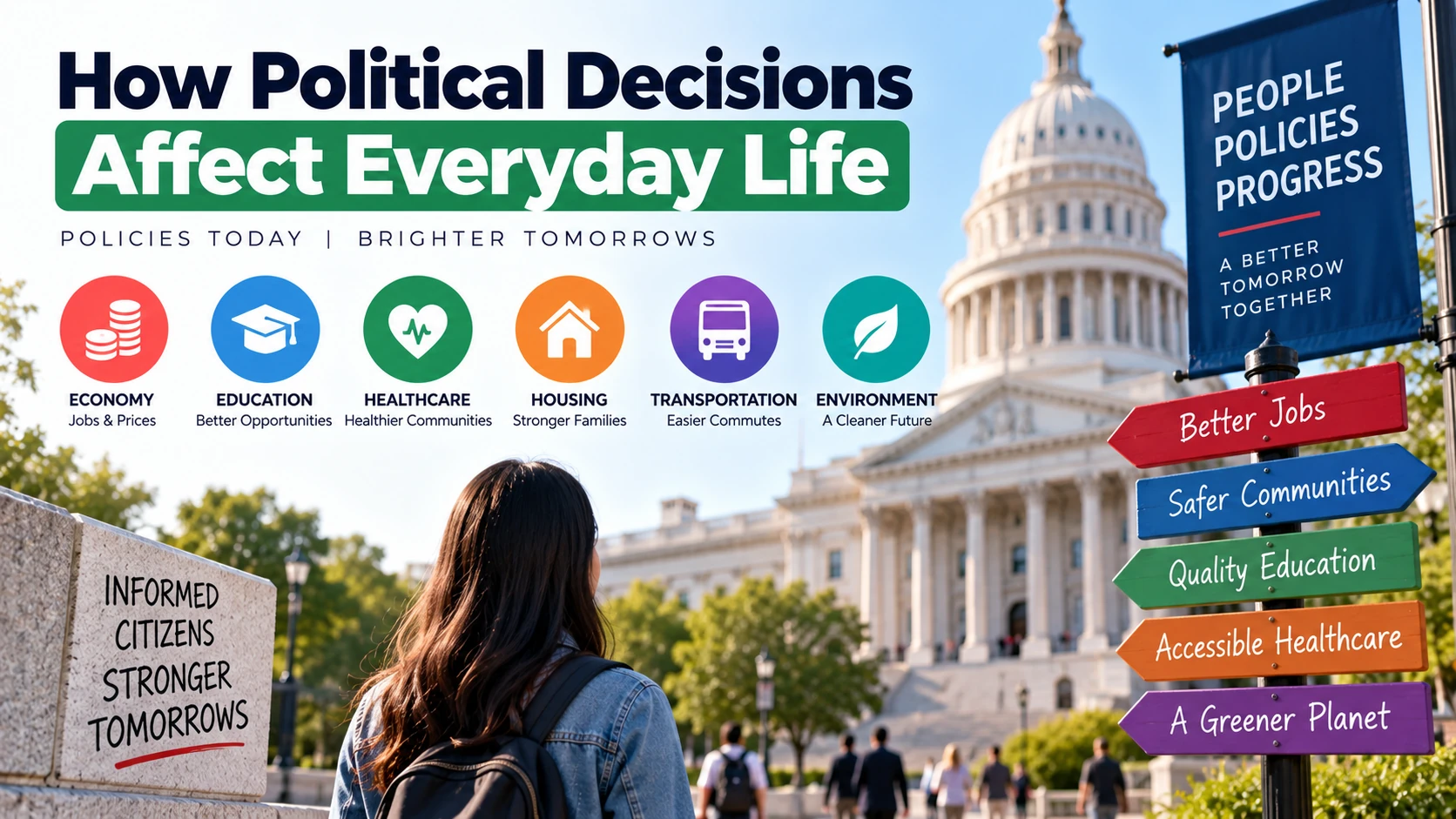
Politics can sometimes seem distant from everyday life, especially when discussions focus on elections, government institutions, or political debates. However, political decisions can influence many ordinary experiences, from the cost of goods and quality of public services to education, transportation, employment, and healthcare. Government policies can shape the environment in which individuals, families, and businesses make decisions.
Influence on the Economy
Political decisions can have an effect on economic conditions. Governments make decisions about taxation, public spending, trade, employment policies, and regulations. These choices can influence businesses and consumers in different ways.
Changes in taxes can affect household budgets and business expenses. Government spending on infrastructure or public projects can create economic activity and employment opportunities. Similarly, changes in trade policies can influence the availability and cost of certain products.
Impact on Healthcare
Government policies can affect how healthcare services are funded, regulated, and delivered. Decisions about public hospitals, health programs, medical regulations, insurance systems, and healthcare budgets can influence people’s access to medical services.
Public health decisions can also become particularly important during emergencies. Governments may introduce measures designed to protect communities, provide information, or increase healthcare capacity.
Education and Schools
Education is another area strongly connected to political decisions. Governments may determine education budgets, curriculum standards, school infrastructure programs, teacher policies, and access to educational opportunities.
Decisions made at the national, state, or local level can influence what resources schools receive and how educational systems operate. For families, these policies can affect children’s learning opportunities and the cost of education.
Transportation and Infrastructure
The roads people use, public transportation available in their communities, and infrastructure projects are also connected to government decisions. Authorities decide how public funds are allocated toward roads, bridges, railways, airports, public transit, and other infrastructure.
When infrastructure improves, commuting can become easier and businesses may gain better access to customers and markets. Poor planning or insufficient investment, on the other hand, can contribute to congestion and other everyday challenges.
Employment and Business
Political decisions can influence workplaces through labor laws, minimum wage policies, taxation, business regulations, workplace safety requirements, and economic programs.
For business owners, regulatory changes can affect operating costs and hiring decisions. For workers, employment policies can influence workplace protections, benefits, wages, and working conditions.
Effects on Prices and Household Budgets
Government decisions can sometimes affect the prices consumers pay. Taxes, subsidies, import duties, energy policies, and regulations can influence production and distribution costs.
However, prices are rarely determined by politics alone. Global markets, supply and demand, weather, energy costs, currency movements, and other economic factors also play important roles.
Environmental Policies
Political decisions can shape how governments address pollution, waste management, energy production, water resources, and climate-related risks. Environmental regulations can influence industries while also affecting the quality of air, water, and public spaces.
For individuals, environmental policies can influence transportation choices, energy costs, waste collection, and access to cleaner public spaces.
Public Safety and Law
Government decisions also establish and enforce laws that affect everyday behavior. Rules related to road safety, consumer protection, workplace standards, construction, public security, and digital activity can directly influence daily routines.
Effective laws can provide protections for citizens, while enforcement and implementation determine how those rules work in practice.
The Role of Citizens
Political decisions do not exist separately from citizens. People can influence political systems through voting, public discussions, community participation, petitions, civic organizations, and other lawful forms of engagement.
Being informed about policies and understanding how different levels of government operate can help people make more meaningful decisions about issues affecting their communities.
Why Political Awareness Matters
Political awareness does not require following every political debate. Understanding major policies and their potential effects can help people evaluate information, participate responsibly, and recognize how public decisions connect with personal and community interests.
It is also important to consider information from reliable sources and distinguish between verified information, opinion, and political claims.
Conclusion
Political decisions can influence many aspects of everyday life, even when their effects are not immediately visible. Healthcare, education, employment, infrastructure, prices, environmental protection, and public safety can all be affected by government policies. Understanding these connections helps people recognize the importance of civic participation and become more informed members of their communities.